
Verified Lake Elsinore Reverse Directory Run
The strongest local finding is a documented reverse-directory trail rather than an assumed full shelf. A 2019 City of Lake Elsinore environmental report identifies Haines cross-reference or reverse directories for 1971, 1986, 1991, 1996, 2001, and 2006-07. It also identifies digital business directories for 2012 and 2018. A separate City-hosted Phase I report records a Sherman Library and Gardens review of business, city, cross-reference, and telephone directories from 1985 through 2010 at roughly five-year intervals.
Those years provide dated research stops. They do not prove that every annual Lake Elsinore city directory survives, that every street appears, or that a listed name was an owner. Reverse directories favor developed areas, and the older editions can miss outlying or new subdivisions. The edition, source, address, and result status should stay together in the research note.
| Collection | Years or range | Where held or evidenced | Access value |
|---|---|---|---|
| Haines reverse directories | 1971, 1986, 1991, 1996, 2001, 2006-07 | City-hosted ERIS report and named source libraries | Address to listed occupant or business |
| Digital business directories | 2012 and 2018 | City-hosted ERIS report | Address to business occupant; incomplete for homes |
| Sherman review | 1985-2010, about five-year steps | Sherman Library and Gardens, documented in CEQA filing | Occupants and nearby addresses |
| Riverside telephone books | 1942-1963 | Library of Congress collection record | Alphabetic subscribers, addresses, and numbers |
| White and yellow pages | 1921-1933 | Library of Congress | Subscriber and business clues; verify Elsinore volume coverage |
A historical Lake Elsinore city directory is best treated as a dated observation. It can place a name at an address for an edition, then send the search toward a deed, obituary, census, or newspaper.
Note: The documented years are research stops, not proof that every Lake Elsinore street or every annual volume survives.
How Lake Elsinore Directory Entries Read
The City-hosted 2019 reverse-directory report searched the ranges 26000-30000 Lake Street and 28000-30000 Stoneridge Terrace. Its results are grouped by year and source, then arranged by street number. A typical documented result can expose the edition year, source or publisher, street number, street name, and corresponding occupant or business name. It may also report that an address was not listed or that a nearby address was supplied where the exact address was absent.
That format is different from an alphabetic city directory entry. Traditional alphabetic volumes may use surname, given name or initial, spouse notation, occupation or affiliation, an `h` mark for householder or home address, an `r` mark for residence or rooms, and widow notation. Those abbreviations must be tied to the particular volume inspected. No scanned local alphabetic household entry was verified, so a plausible-looking example should not be invented.
| Entry element | Reading rule |
|---|---|
| Edition year | Places the observation in time; it does not make the result current. |
| Street number and name | Connects the listing to the printed street sequence and any address change. |
| Occupant or business | Shows what the source lists, not necessarily ownership or every person present. |
| Source and publisher | Helps judge coverage, omissions, and where the volume or report can be checked. |
| No listing or nearby result | A gap can reflect coverage, an unlisted household, a new development, or a changed number. |
- Criss-cross directory
- A reverse directory that starts with an address and points to a listed occupant or business.
- Householder index
- A name or address finding aid that can identify the principal listed household contact, subject to the volume's rules.
- Abbreviation key
- The volume-specific explanation for marks such as householder, resident, roomer, or widow.
The City-hosted environmental report is the local evidence for the Haines years and the limits of that sample.
Search Lake Elsinore Directories First
A Lake Elsinore city directory search needs the historic place name. The community was long indexed as Elsinore, and the incorporated city adopted Lake Elsinore in 1972. Older directories, maps, census indexes, newspapers, and catalog records can therefore use Elsinore even when the modern searcher starts with Lake Elsinore.
Use both names with Riverside County and an approximate year. For a record before 1893, add the predecessor-county question because Riverside County had not yet been created. The same four-key test works for a family name, a business, a street, or an old newspaper notice: Lake Elsinore, Elsinore, the present or predecessor county, and the date range.
This local naming quirk explains a great many false gaps. A directory shelf may be real even when a modern catalog phrase misses it. Search terms should change with the record era, not just with the reader's current address label.
Note: Elsinore is a search key for older records, while Lake Elsinore is the later municipal name.
Where Lake Elsinore Directory Volumes Reside
The Riverside County Library System's Lake Elsinore branch is at 600 W. Graham Avenue, Lake Elsinore, CA 92530, with phone 951-674-4517. Its catalog and licensed genealogy resources are useful starting points. The research does not confirm an itemized online shelf list for city directories, reverse directories, telephone books, obituary indexes, or yearbooks. Ask branch reference staff to verify the title, years, access setting, and place-name heading before planning a visit.
The Lake Elsinore Historical Society and Museum, in the city-owned former armory at 183 N. Main Street, is a local fallback for photographs, maps, family files, newspapers, school material, and building history. The California State Library can bridge directory, telephone, map, and newspaper holdings beyond the local shelf. FamilySearch and the Library of Congress may provide catalog or scan access, with account, affiliate, or in-building limits for some material.
The California State Library history collections page shows the wider repository route.

The collection view is a reminder to search directories, maps, newspapers, and local history as related but separate source types.
The Lake Elsinore Historical Society supplies the local contact route for material the online catalog does not describe.
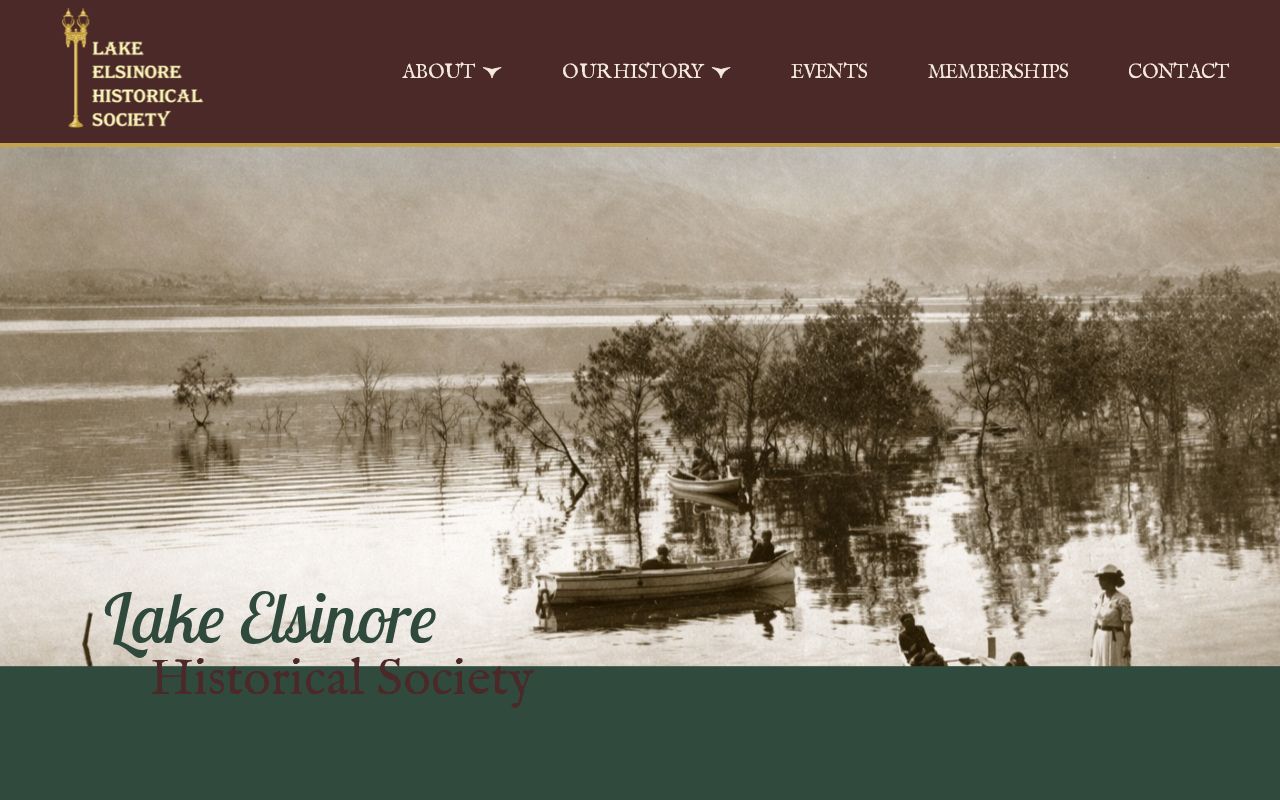
Ask for surname files, old telephone or city directories, subdivision maps, school material, cemetery evidence, and reproduction rules as separate requests.
Pair Lake Elsinore Directory Year with Census
A city directory is often annual or intermittent, while the federal census is a ten-year snapshot. Pairing the two can show whether a name stayed at an address, moved between editions, changed a surname, or appeared in a different household. Use the directory's street guide and the census enumeration district rather than assuming that a similar name is the same household.
Public federal schedules currently run through 1950 under the 72-year rule. The 1890 population schedules were largely destroyed, leaving a long gap that local directories, assessment rolls, voter registers, deeds, newspapers, church records, and cemetery evidence may help bridge. A census can show household relationships, ages, birthplaces, occupations, and residence; it does not turn a reverse listing into a deed or a current address.
- Write down the exact directory edition, street number, source, and listed name.
- Search the closest public census year under both Elsinore and Lake Elsinore area references.
- Compare household members, age range, birthplace, occupation, and street or enumeration clues.
- Check a deed, obituary, probate file, or newspaper notice before treating a movement as confirmed.
- Record the missing 1890 schedules and any directory gap rather than filling them with a guess.
The National Archives 1950 Census guidance explains the public-release boundary and the role of the schedules in historical research.
Note: Pairing a directory edition with the nearest census year exposes household context without turning either source into a complete roster.
Use 1892 Lake Elsinore Directory Maps
The Library of Congress catalog identifies an August 1892 Elsinore Sanborn fire-insurance map set with two sheets. The sheets can show building footprints, construction materials, uses, and historic street labels. They are especially useful when an address index fails or when an old street number needs a physical-era check.
A Sanborn map does not name every occupant. Pair its building and street context with a directory, deed, assessment entry, newspaper, or census schedule. For a property history, compare the map label with the Recorder's legal description, the recorded tract map, and the present APN. If the older community name appears, retain Elsinore as the catalog term.
The Library of Congress Elsinore Sanborn item is the authoritative map lead, while the full city directory record remains edition-specific.
Lake Elsinore Newspaper Records Fill Gaps
Newspapers can fill the years between Lake Elsinore city directory editions. The California Digital Newspaper Collection supports OCR searching for names, streets, Elsinore, legal notices, obituaries, property advertisements, weddings, and society items. OCR is imperfect. Search compound surnames, initials, spacing, maiden and married names, and nearby communities, then browse the date range around a promising hit.
A newspaper notice is a lead, not a final identity finding. An obituary can point to a relative, former town, or probate file. A property advertisement can provide an older street label or owner claim. A legal notice can supply a case or estate reference. Verify the fact with the Riverside Recorder, Superior Court, vital-record custodian, or a dated census where possible.
The California Digital Newspaper Collection is a useful open search layer when a directory year is missing from the local shelf.
Note: OCR can miss names, so browse the surrounding issue and verify a promising notice with the responsible record custodian.
Document Gaps in Lake Elsinore Directories
The research confirms valuable years, but it does not confirm a complete Lake Elsinore city directory run. The library branch page gives location, hours, phone, and catalog access without publishing a shelf inventory. The Historical Society gives a local research contact without promising every telephone or reverse volume. The Haines years come from a City-hosted environmental review and should be cited as documented samples.
When a volume cannot be found, write down the search terms, catalog, repository, date, and result. Ask whether the item is on-site, restricted to a library card or affiliate center, held as microfilm, or available only through a reference request. A negative catalog result may reflect the wrong place name, publisher, year, collection, or access mode.
That discipline makes the city directory record more honest and more useful. The missing year becomes a research question, while the verified 1971, 1986, 1991, 1996, 2001, and 2006-07 Haines stops remain solid dated evidence.
Lake Elsinore City Directories for Family History
For family history, start with a known address and edition, then trace the listed name across the documented reverse years. Add census households, obituaries, probate, deeds, and newspapers to distinguish a move from an index gap. A past resident may appear in a directory while the property owner appears only in a deed, so the two trails should remain separate.
Keep the old place name, source, page or report reference, and any “not listed” result. Search spouses, relatives, initials, compound surnames, and nearby addresses without assuming that a similar name is one person. When the trail reaches a record with a protected or confidential access rule, use the official request or consent route rather than attempting to bypass it.
The Lake Elsinore previous-residents trail applies these directory collections to one address, while the city directory page remains the place to compare the collections themselves.
Note: A missing catalog entry is evidence of an access gap, not proof that a household or edition never existed.